Marie Antoinette Was the Original Fashion Influencer
Long before TikTok trends and front-row selfies, there was Marie Antoinette — accidentally inventing influencer culture while dismantling the French monarchy. Her crime wasn’t just excess. It was visibility.
In an era when power was supposed to feel distant and divine, Marie Antoinette made it aesthetic, personal, and relentlessly documented. She didn’t simply wear clothes; she performed them. And in doing so, she turned fashion into a public narrative — one that people loved to watch, imitate, and eventually resent.
Dressing as Performance
Marie Antoinette understood something that modern influencers know well: fashion tells a story.
In fact, every gown, wig, ribbon, and silhouette communicated meaning. It showed who she was — and, more importantly, who she was becoming. At Versailles, clothing was not decoration. Instead, it worked as diplomacy. What you wore defined your status, your access to power, and your relevance at court.
Because of this, her looks were constantly reported, sketched, and copied across Europe. Pamphlets described her dresses in detail, much like fashion blogs analyze celebrity outfits today. As a result, being seen in the wrong gown — or simply too many new ones — became a political act.
In short, visibility was currency, and Marie Antoinette spent it freely.
The Aesthetic of Excess
The queen’s style was never subtle. Towering powdered wigs, pastel silks, wide panniers, and layers of bows created a silhouette meant to dominate space.
However, this extravagance was not accidental. At court, fashion functioned as visual hierarchy. The larger the dress, the higher the status. Marie Antoinette did not just follow this system. Instead, she exaggerated it.
At the same time, she popularized lighter colors, informal muslin gowns, and pastoral fantasies. These choices rejected traditional royal stiffness. On one hand, they made her look modern and approachable. On the other hand, they made her vulnerable.
After all, fashion that feels personal often invites judgment.
When Fashion Becomes Political
The issue was not that Marie Antoinette loved beautiful things. Rather, it was that she loved them publicly during a period of economic crisis and social unrest.
Because of this context, her dresses became symbols. Silk came to represent inequality. Shoes turned into propaganda. Hairstyles became caricatures. Once again, fashion was not neutral.
Moreover, the public did not only criticize her spending. They criticized her image. Excess on a woman’s body was read as moral failure, not simply financial irresponsibility.
Sound familiar?
Influence Before the Internet
Marie Antoinette did more than wear fashion. In reality, she generated it.
Trends from her court spread quickly through aristocratic Europe. Hair became taller. Colors softened. Accessories multiplied. Without intending to, she shaped taste on a massive scale.
This is the foundation of influencer culture: visibility combined with imitation. As her visibility increased, her control over her image decreased.
Eventually, the queen was no longer seen as a person. Instead, she became content.
Sofia Coppola Knew Exactly What She Was Doing
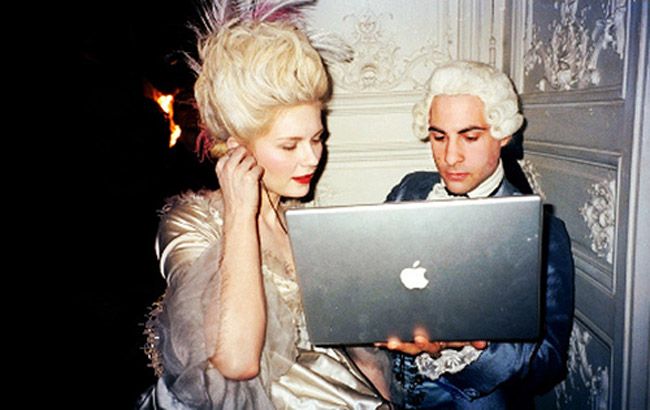
In Marie Antoinette (2006), Sofia Coppola reframed the queen as a misunderstood cultural figure rather than a villain.
The pastel gowns, the anachronistic Converse sneakers, and the post-punk soundtrack were not mistakes. On the contrary, they were deliberate commentary. Coppola translated 18th-century spectacle into a modern language of celebrity, aesthetics, and constant scrutiny.
In this light, Marie Antoinette was not out of touch. She was simply too visible.
The film does not excuse her actions. Instead, it places them in context. It suggests that her downfall was not fashion itself, but the way fashion amplified her presence at the wrong moment.
A Woman Trapped in Her Image
Marie Antoinette’s greatest strength — her aesthetic influence — ultimately became her greatest weakness.
Once her image solidified, change was no longer possible. She could not shift toward seriousness, humility, or invisibility. The public had already decided who she was.
As a result, fashion froze her in time.
This is the risk of visibility-based power. When image becomes identity, evolution becomes impossible.
Why She Still Matters
Marie Antoinette remains relevant because her story closely mirrors modern culture.
Even today, women are rewarded for beauty, performance, and accessibility. At the same time, they are punished for being too visible. We continue to confuse visibility with responsibility. We still turn personal style into moral evidence.
Fashion itself has not changed. The platforms have.
Fashion Always Has Consequences
Marie Antoinette did not invent excess. She inherited it. However, she introduced something far more modern: the idea that personal style could destabilize public perception.
Fashion has never been just clothing. Instead, it is power, performance, and risk — wrapped in silk, amplified by attention, and judged by the crowd.
Ultimately, to dress publicly is to participate in politics, whether you intend to or not.